
{主关键词}
下北阳光灿烂的日子
暴雨+强对流双预警齐发 部分地区将有10级以上雷暴大风_我的网站

一 | 中央气象台8月26日06时发布暴雨黄色预警、强对流天气蓝色预警,预计,局地将有雷暴大风或冰雹等强对流天气。 暴雨黄色预警 预计,8月26日08时至27日08时,江西中南部、福建西部和南部、湖南南部、广西西部和南部、广东中西部和东南部、云南中南部以及青海东部、甘肃中部、宁夏北部、陕西北部、山西中北部、河北中南部、天津南部、山东北部等地部分地区有大到暴雨,其中,江西南部、广西南部、广东中部和西北部以及山西北部、河北中南部等地部分地区有大暴雨(100—240毫米)。

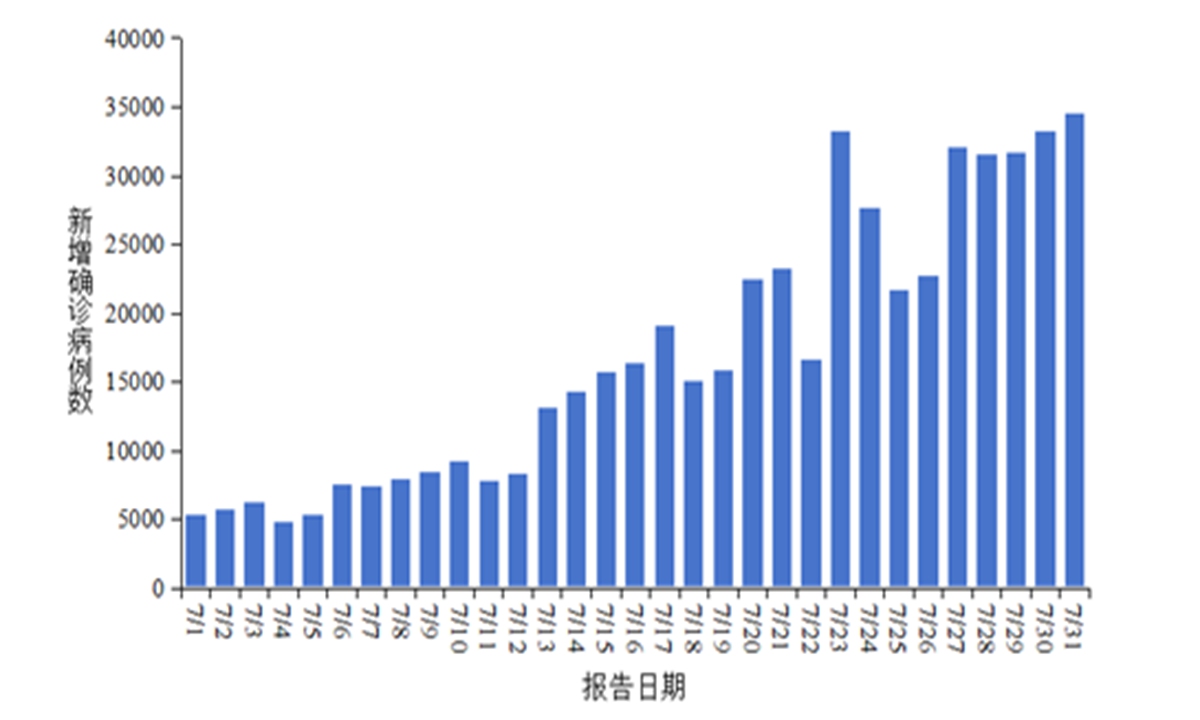
China reported 522,000 newly confirmed COVID-19 cases in July, including 487 severe cases and one related death with cases showing a fluctuating upward trend, China's national disease control authority said.
The current uptick in infections represents another regular cyclical wave, with its severity comparable to surges seen in the past two years. The upward growth curve has slowed markedly, and the country is now on the plateau phase of this epidemic peak, said the Chinese Center for Disease Control and Prevention (Chinese CDC) on Thursday.
All tested infection samples were confirmed to be the Omicron variant, with the NB.1.8.1 strain and its sublineages accounting for the majority of circulating cases, the Chinese CDC said.
A Beijing-based respiratory disease specialist told the Global Times that waning population immunity, continued virus mutations that weaken existing antibody protection, and increased summer travel have contributed to the recent modest rise in infections. However, there is no evidence that the virus has become more pathogenic. Nationwide infections appear to be nearing their peak and case numbers may begin falling in late August.
According to sentinel hospital surveillance data, from June 29-July 5 to July 27-August 2, the proportion of influenza-like illness among all outpatient and emergency visits at China's 1,041 COVID-19 and influenza sentinel hospitals edged up with slight fluctuations, standing at 4.3 percent, 4.4 percent, 4.5 percent, 4.4 percent and 4.5 percent, respectively.
During the same period, the COVID-19 positivity rate among patients with influenza-like illness in outpatient and emergency departments rose for consecutive weeks.
Several factors drove the fluctuating rise in COVID-19 cases in July. Population immunity has waned, as more than six months have passed since the last major wave of infections for most people, while continued SARS-CoV-2 mutations have reduced the protection provided by existing antibodies, Li Tongzeng, a respiratory disease medic from Beijing You An Hospital to the Capital Medical University, told the Global Times on Friday.
These factors, combined with increased travel and population mobility during the summer vacation, contributed to the recent small-scale surge. Based on patterns observed in recent years, COVID-19 infections tend to rise every six to eight months as population immunity declines, said Li.
The expert noted that while the virus continues to mutate, there is no evidence that it has become more pathogenic. Clinical data show that most patients develop only mild symptoms, with very few progressing to pneumonia or requiring hospitalization.
The Chinese CDC noted on Thursday that since COVID-19 was reclassified as a Category B infectious disease under Category B management, it has evolved into a prevalent, recurring respiratory infectious disease in China, with one to two epidemic fluctuations occurring nationwide each year.
Li also noted that residual immunity from previous infections also helps reduce disease severity, with most reinfections presenting as mild upper respiratory symptoms that resolve within about a week. The single COVID-related death reported nationwide in July further indicates that the current fatality rate remains very low.
Judging from historical epidemic patterns and current case growth trajectories, national infection figures may begin to decline in late August. Nationwide case numbers are now nearly at their peak, with declines already observed in some regions, said Li.
The Chinese CDC also said on Thursday that surveillance had not detected any variants posing major public health risks, nor had the current wave caused notable disruptions to the healthcare system.
The public is advised to take appropriate protective measures, including wearing masks when necessary, maintaining good personal hygiene, adopting healthy lifestyles and getting vaccinated as recommended.
。上述部分地区伴有短时强降水(最大小时降雨量20~50毫米,局地可超过80毫米),局地有雷暴大风或冰雹等强对流天气。
 强对流天气蓝色预警
预计8月26日08时至27日08时,东北地区东部、华北西北部和东部、江南东部、华南东部等地的部分地区将有8级以上雷暴大风或冰雹天气,其中,山东北部部分地区将有10级以上雷暴大风,最大风力可达11级以上;东北地区北部和南部、西北地区东北部、华北西北部和中东部、江南南部、华南、西南地区东南部等地的部分地区将有小时雨量大于20毫米的短时强降水天气,其中,辽宁南部、山西北部、河北西部、山东北部、江西中东部、广东西南部和中部等地的部分地区小时雨量大于50毫米,最大可达80毫米以上。
强对流天气蓝色预警
预计8月26日08时至27日08时,东北地区东部、华北西北部和东部、江南东部、华南东部等地的部分地区将有8级以上雷暴大风或冰雹天气,其中,山东北部部分地区将有10级以上雷暴大风,最大风力可达11级以上;东北地区北部和南部、西北地区东北部、华北西北部和中东部、江南南部、华南、西南地区东南部等地的部分地区将有小时雨量大于20毫米的短时强降水天气,其中,辽宁南部、山西北部、河北西部、山东北部、江西中东部、广东西南部和中部等地的部分地区小时雨量大于50毫米,最大可达80毫米以上。
 。
。Current article:http://w6mgk.tichannangenzhuchuapin.cfd/list_f0y/hgc3o7.html
Published on:19:25:04
- 959782025年618活动什么时候买东西最便宜?淘宝京东是6月18日当天购买最便宜还是5月30号晚上20点开门红优惠力度大?
- 1018A股收评:超3900只个股飘绿,三大指数集体收跌,A股收评:超3900只个股飘绿,三大指数集体收跌
- 5614143王川小米出现在苏宁,就彩电、空调等方面的深入合作进行了探讨。
- 3343935上海:创新发展商业航天和卫星互联网 发展系列化重复使用商业火箭
- 301Chinese short-drama platform moves to curb 'copy-paste' AI faces
- 50858奥克兰一房屋被大火吞噬,一名女子和孩子及时逃生
- 9853920Handful caused SL crisis: Minister
- 8469234米体:尤文希望租借沃尔夫斯堡球员梅勒,补强左边后卫位置
- 916霍里:这是哈登最后一份合同了 但骑士目前的阵容无法帮他夺冠
- 731564睡眠不足,硬撑跑步,伤害到底有多大?
- 578上海男篮官方:球队已和刘铮&李弘权&张镇麟等六名球员完成续约
- 34275使用高德导航,目的地设置为陕西陇县,导航出现路线规划故障,错误引导我在陇山收费站
- 8846190Somali forces kill 200+ al-Shabab militants
- 9529815小学副校长涉强奸女生未遂后续:二审裁定发回重审
- 1597意媒:因本轮意甲剩余四场比赛推迟,三名停赛球员处罚顺延
- 116981荣晟环保:上半年净利润同比增长65.54% 拟10派6元
- 183686OPPO Find X6系列爆料:将采用新款高像素长焦摄像头_机身背部_外观
- 15588森林狼14个月后再易主 马克-洛尔出售球队控股权
- 96016广汽传祺6月最新购车权益上线 涉及多款车型,权益各不相同
- 5824877首测硝烟再起 《大航海时代:凯旋航线》“禁忌之海”等你来战
- 643《巫师3:狂猎 重制版》官宣!9月29日发售:老玩家免费升级
- 851874来烟台想尝本地特色风味 怎么选合适的海鲜餐厅
我的网站热门国内
- Copyright @ 2016-2017 我的网站 版权所有